Loyalty Programs: A 2025 US Sales Strategy to Retain 30% More Customers

Re-evaluating loyalty programs in 2025 is crucial for US businesses, leveraging data and personalization to retain 30% more customers and drive significant sales growth through enhanced engagement.
In today’s dynamic marketplace, customer loyalty isn’t just a buzzword; it’s the bedrock of sustainable business growth. As we approach 2025, the imperative to re-evaluate and optimize customer loyalty initiatives has never been stronger, especially for businesses aiming to strengthen their presence in the United States. This article delves into why re-evaluating loyalty programs is a critical 2025 US sales strategy, capable of helping companies retain up to 30% more customers.
The evolving landscape of customer loyalty in 2025
The consumer landscape is constantly shifting, driven by technological advancements, changing demographics, and evolving expectations. What worked for loyalty programs five years ago may no longer resonate with today’s discerning customers. Businesses must recognize these shifts and adapt their strategies accordingly to maintain relevance and effectiveness.
Today’s customers, particularly in the US market, are not just seeking discounts; they crave meaningful experiences and personalized interactions. They expect brands to understand their individual needs and preferences, rewarding their loyalty with more than just transactional benefits. This fundamental change necessitates a fresh look at how loyalty programs are designed and implemented.
Beyond points and discounts: the new customer expectation
- Personalized experiences: Customers expect tailored offers and communications based on their past behavior and preferences.
- Experiential rewards: Access to exclusive events, early product releases, or unique brand experiences often hold more value than monetary discounts.
- Seamless integration: Loyalty programs should seamlessly integrate across all touchpoints, from online to in-store, providing a consistent and effortless experience.
- Values alignment: Consumers are increasingly loyal to brands that align with their personal values, such as sustainability or social responsibility.
Understanding these evolving expectations is the first step toward building a loyalty program that genuinely connects with customers. A program that fails to meet these modern demands risks becoming obsolete, leading to missed opportunities for retention and growth.
Why traditional loyalty programs fall short
Many existing loyalty programs in the US market still operate on outdated models, primarily focusing on a simple points-for-purchase system. While this approach has its merits, it often lacks the depth and personalization required to foster genuine, long-term customer loyalty in 2025. These programs frequently fail to differentiate between high-value and occasional customers, treating everyone with a one-size-fits-all strategy.
The primary pitfall of traditional loyalty programs is their transactional nature. They incentivize purchases but often neglect the emotional connection that truly binds a customer to a brand. Without this emotional engagement, customers are more likely to switch to competitors offering similar or slightly better deals, making retention a constant uphill battle. This transactional focus also makes it difficult to gather rich customer data beyond purchase history, limiting the ability to personalize future interactions effectively.
Common shortcomings of outdated loyalty models
- Lack of personalization: Generic offers fail to capture individual customer interest.
- Limited reward variety: Repetitive or uninspiring rewards lead to program fatigue.
- Complex redemption processes: Difficult-to-understand rules or redemption barriers frustrate customers.
- Infrequent communication: Sporadic or irrelevant communications diminish program engagement.
To truly retain customers, businesses must move beyond these conventional limitations. The goal is to create a loyalty ecosystem that feels like an extension of the customer’s lifestyle, not just another marketing gimmick. This requires a strategic overhaul of how loyalty is perceived and managed within the organization.
Leveraging data analytics for hyper-personalization
The cornerstone of a successful loyalty program in 2025 is robust data analytics. Businesses must move beyond simply collecting data to actively analyzing and acting upon it to create hyper-personalized experiences. This means understanding not just what customers buy, but also why they buy, their preferred channels, and even their lifestyle choices.
Advanced data analytics can help identify critical customer segments, predict future behavior, and pinpoint moments of churn risk. By understanding these nuances, companies can proactively engage customers with relevant offers, personalized content, and timely support, significantly enhancing their perceived value and strengthening their loyalty. This proactive approach transforms loyalty programs from reactive discounting schemes into strategic retention tools.
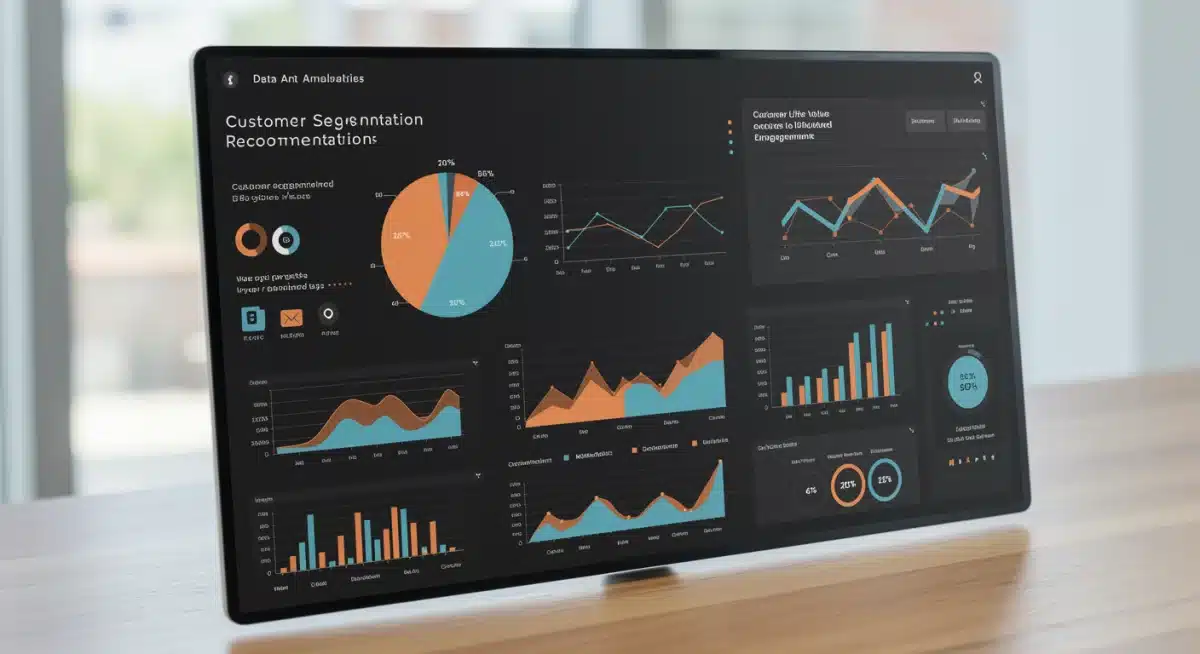
Imagine a loyalty program that knows a customer’s favorite coffee order, remembers their past purchases to suggest complementary products, and even sends a birthday greeting with a personalized offer for their preferred item. This level of personalization, powered by data, is what will differentiate leading brands in 2025.
Implementing advanced data strategies
- Unified customer profiles: Consolidate data from all touchpoints (POS, online, social media) into a single customer view.
- Behavioral segmentation: Group customers based on their purchasing habits, engagement levels, and preferences.
- Predictive analytics: Utilize AI and machine learning to forecast future purchasing patterns and identify potential churn.
- Real-time personalization: Deliver dynamic content and offers based on immediate customer actions and context.
The effective use of data analytics is not just about technology; it’s about a cultural shift within the organization to become more customer-centric. Every decision, from product development to marketing campaigns, should be informed by a deep understanding of the customer.
Creating multi-tiered and experiential loyalty structures
To truly incentivize long-term engagement, loyalty programs in 2025 need to move beyond flat structures. Multi-tiered programs, where customers unlock progressively better rewards and benefits as their engagement increases, are incredibly effective. These tiers create a sense of aspiration and provide clear pathways for customers to achieve higher status, fostering a deeper commitment to the brand.
Beyond tiers, the nature of rewards themselves needs a significant upgrade. Experiential rewards—such as exclusive access to events, early product previews, personalized styling sessions, or even donations to a charity of their choice—often resonate more deeply than simple discounts. These experiences create memorable moments and emotional connections that transcend transactional value, making customers feel truly valued and appreciated.
Designing engaging reward systems
A well-designed tiered system, combined with a diverse range of experiential rewards, encourages customers to not only keep purchasing but also to actively participate in the brand’s ecosystem. This could involve engaging with brand content, referring new customers, or providing valuable feedback. The key is to offer choices that appeal to different customer segments and provide tangible benefits that align with their lifestyles.
- Tiered benefits: Offer escalating rewards like free shipping, dedicated customer support, or higher earning rates for points.
- Exclusive access: Provide members with early access to sales, new product launches, or limited-edition items.
- Community building: Create forums or events where loyal customers can connect with each other and the brand.
- Personalized experiences: Tailor rewards to individual preferences, offering choices that truly matter to each customer.
The goal is to transform the loyalty program from a mere discount mechanism into a comprehensive value proposition that enriches the customer’s relationship with the brand.
Seamless integration and omnichannel engagement
In 2025, a successful loyalty program must be seamlessly integrated across all customer touchpoints, both online and offline. An omnichannel approach ensures that customers can interact with the program effortlessly, regardless of whether they are browsing on a mobile app, shopping in a physical store, or engaging with customer service. Disjointed experiences can quickly lead to frustration and disengagement, undermining the very purpose of the loyalty program.
This integration extends beyond just earning and redeeming points. It involves consistent branding, unified customer data, and personalized communication across all channels. For example, a customer who browses a product online should receive relevant offers for that product when they visit a physical store, and their in-store purchases should be reflected in their online loyalty account instantly. This holistic view of the customer journey is vital for delivering a cohesive and rewarding experience.
Key elements of omnichannel loyalty
- Consistent branding: Ensure the loyalty program’s message and visual identity are uniform across all channels.
- Unified customer data: Maintain a single, updated profile for each customer accessible across all platforms.
- Cross-channel earning and redemption: Allow customers to earn and redeem rewards interchangeably, wherever they interact with the brand.
- Personalized communication: Deliver targeted messages via email, SMS, in-app notifications, or in-store interactions based on their channel preferences.
By embracing an omnichannel strategy, businesses can create a loyalty program that is not only convenient but also deeply embedded in the customer’s everyday interactions with the brand.
Measuring success: KPIs for loyalty program optimization
To ensure that re-evaluating loyalty programs translates into tangible results, businesses must establish clear Key Performance Indicators (KPIs) and continuously monitor their program’s effectiveness. Without robust measurement, it’s impossible to identify areas for improvement or to quantify the return on investment of loyalty initiatives. The focus should be on metrics that directly reflect customer retention, engagement, and lifetime value.
Beyond traditional sales metrics, companies should track behavioral indicators such as redemption rates, program participation across different tiers, and customer feedback. Analyzing these KPIs provides valuable insights into what’s working and what needs adjustment, enabling continuous optimization of the loyalty program. Regular reporting and analysis are essential to adapt strategies to changing market conditions and customer behaviors.
Essential KPIs for loyalty programs
- Customer retention rate: Percentage of customers who continue to purchase over a given period.
- Customer lifetime value (CLTV): The total revenue a business can reasonably expect from a single customer account over their relationship with the brand.
- Redemption rate: Percentage of earned rewards that are actually redeemed by customers.
- Program engagement rate: How actively customers interact with the program beyond just earning points (e.g., app usage, email opens, survey participation).
- Net Promoter Score (NPS): Measures customer loyalty and willingness to recommend the brand.
By diligently tracking these metrics, businesses can ensure their loyalty programs are not just operational but are actively contributing to their 2025 sales objectives and long-term customer retention goals. This data-driven approach is crucial for demonstrating the program’s value and securing ongoing investment.
| Key Aspect | Brief Description |
|---|---|
| Hyper-Personalization | Utilizing data analytics to provide tailored offers and experiences, moving beyond generic discounts. |
| Experiential Rewards | Offering unique experiences (e.g., exclusive access, events) instead of just monetary benefits to foster deeper connection. |
| Omnichannel Integration | Ensuring seamless loyalty program interaction across all online and offline customer touchpoints. |
| Data-Driven Optimization | Continuously monitoring KPIs and adapting loyalty strategies based on performance insights for maximum impact. |
Frequently asked questions about loyalty programs in 2025
Re-evaluating loyalty programs in 2025 is crucial because customer expectations have shifted dramatically. Consumers now seek personalized experiences and meaningful engagement beyond simple discounts. Outdated programs risk losing relevance and failing to retain valuable customers in a competitive US market, impacting sales growth significantly.
Data analytics enhances loyalty programs by enabling hyper-personalization. It allows businesses to understand individual customer preferences, predict behaviors, and deliver tailored offers. This precision moves beyond generic promotions, fostering deeper engagement and increasing the likelihood of long-term customer retention by making interactions more relevant and valuable.
Experiential rewards are non-monetary benefits like exclusive event access, early product previews, or personalized services. They are important because they create memorable moments and emotional connections, which often resonate more deeply with customers than simple discounts. These unique experiences build stronger brand loyalty and a sense of belonging.
Omnichannel integration ensures a seamless and consistent loyalty program experience across all customer touchpoints, whether online or in-store. This eliminates friction, making it easier for customers to earn and redeem rewards, and receive personalized communications. A unified experience prevents frustration and strengthens overall engagement with the brand, fostering loyalty.
Key KPIs for loyalty program success include customer retention rate, customer lifetime value (CLTV), redemption rate, program engagement rate, and Net Promoter Score (NPS). Tracking these metrics provides comprehensive insights into the program’s effectiveness, allowing businesses to identify areas for improvement and demonstrate the return on investment of their loyalty initiatives.
Conclusion
The journey to enhanced customer retention in 2025 for US businesses hinges on a proactive and intelligent approach to loyalty programs. Moving beyond transactional models to embrace hyper-personalization, experiential rewards, and seamless omnichannel integration is not merely an option but a strategic imperative. By diligently leveraging data analytics and continuously optimizing programs based on robust KPIs, companies can transform their customer relationships, fostering genuine loyalty and achieving the ambitious goal of retaining 30% more customers. The future of sales success in the US market belongs to those who understand that loyalty is earned through consistent value and meaningful engagement.